Influencers and Unproven Health Claims: Curbing Misleading Promotion in the United States and Canada
DOI :
https://doi.org/10.7202/1126623arMots-clés :
désinformation, influenceurs, réseaux sociaux, réglementation, cellules souches, médecine régénérative, intelligence artificielleLangue(s) :
AnglaisRésumé
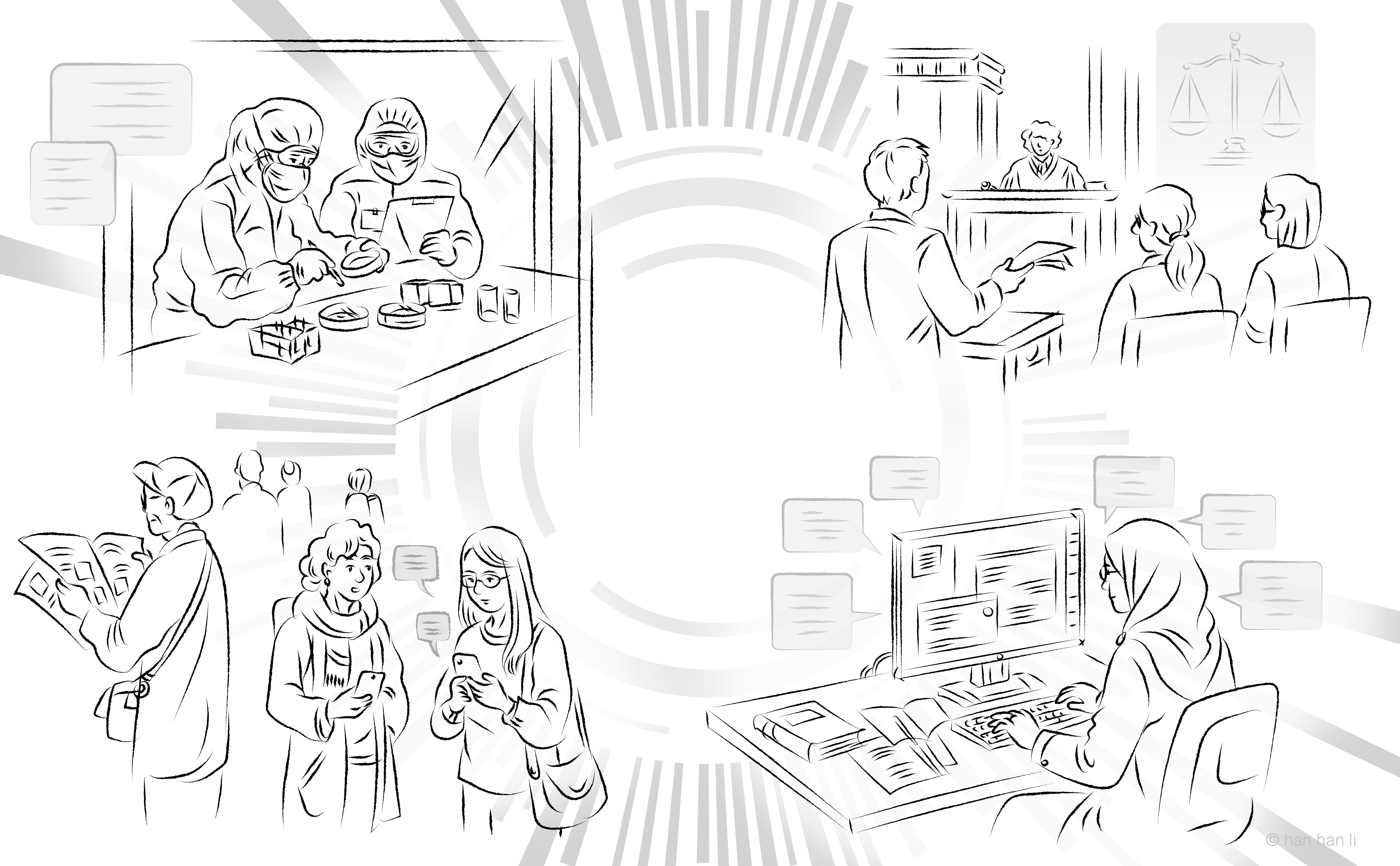
L’essor des réseaux sociaux a permis aux influenceurs de façonner le discours sur la santé publique et de promouvoir des produits et des interventions de santé non éprouvés. Nous examinons ici les défis pratiques et réglementaires ainsi que les opportunités liés au marketing de la santé mené par les influenceurs aux États-Unis et au Canada. Malgré les interdictions légales existantes concernant la publicité trompeuse directement liée aux influenceurs, telles que définies par les directives réglementaires officielles, leur application reste insuffisante. Les cadres réglementaires actuels autorisent des allégations de santé vagues. De plus, la surveillance diffère entre les influenceurs professionnels de santé agréés et les influenceurs profanes. Les plateformes de réseaux sociaux sont complices ou indifférentes à l’amplification de la désinformation, car celle-ci stimule l’engagement et sert leurs motivations lucratives. Pour lutter contre le marketing de santé trompeur des influenceurs, des stratégies à la fois « dures » et « douces » sont envisagées, notamment la coordination des politiques internationales et des solutions algorithmiques qui réduisent la visibilité des contenus trompeurs. Un défi majeur reste de savoir comment susciter la participation volontaire de puissantes multinationales disposant d’une influence politique et de lobbying. Nous soulignons l’utilité potentielle de mécanismes d’application automatisés soigneusement conçus, notamment des systèmes de surveillance des contenus basés sur l’IA et des procédures automatisées de notification et de retrait, tout en plaidant pour une approche équilibrée qui respecte la liberté d’expression. Il est nécessaire de mettre en place une réglementation et des mécanismes d’application actualisés, évolutifs et équitables afin de protéger les consommateurs, de favoriser une communication en matière de santé fondée sur des données probantes et de rétablir la responsabilité dans le marketing de la santé numérique.
Références
1. Powell J, Pring T. The impact of social media influencers on health outcomes: Systematic review. Social Science & Medicine. 2024;340:116472.
2. Influencer Marketing Hub. What is an influencer? – Social media influencers defined. Influencer Marketing Hub. 1 Oct 2025.
3. Luong A. All that glitters is gold: the regulation of hidden advertisements and undisclosed sponsorships in the world of beauty social media influencers. William & Mary Business Law Review. 2020;11(2):565-607.
4. Amed I, Balakrishnan V, Hoad L, O’Shea T. Feeling good: The future of the $1.5 trillion wellness market. McKinsey & Company. 8 Apr 2021.
5. Moran RE, Swan AL, Agajanian T. Vaccine misinformation for profit: conspiratorial wellness influencers and the monetization of alternative health. International Journal of Communication. 2024;18:1202-24.
6. Baker SA. Alt. Health Influencers: how wellness culture and web culture have been weaponised to promote conspiracy theories and far-right extremism during the COVID-19 pandemic. European Journal of Cultural Studies. 2022;25(1):3-24.
7. Council of Canadian Academies. Fault Lines. Ottawa: Expert Panel on the Socioeconomic Impacts of Science and Health Misinformation, CCA. 26 Jan 2023.
8. Do Nascimento IJ, Pizarro AB, Almeida JM, et al. Infodemics and health misinformation: A systematic review of reviews. Bulletin of the World Health Organization. 2022;100(9):544-61.
9. Mostagir M, Siderius J. Social inequality and the spread of misinformation. Management Science. 2023;69(2):968-95.
10. Varkey B. Principles of clinical ethics and their application to practice. Medical Principles and Practice. 2021;30(1):17-28.
11. Matter. Consumers continue to seek influencers who keep it real. Matter News. 22 Feb 2023.
12. Conde R, Casais B. Micro, macro and mega-influencers on Instagram: The power of persuasion via the parasocial relationship. Journal of Business Research. 2023;158:113708.
13. Lou C. Social media influencers and followers: Theorization of a trans-parasocial relation and explication of its implications for influencer advertising. Journal of Advertising. 2022;51(1):4-21.
14. Cox L, Piatkowski T. Influencers and ‘brain building’ smart drugs: A content analysis of services and market activities of nootropic influencers over social media. Performance Enhancement & Health. 2024;12(4):100289.
15. IZEA Worldwide, Inc. IZEA research finds people trust influencer marketing over traditional advertising. GlobeNewswire. 13 Nov 2024.
16. UNESCO. 2/3 of digital content creators do not check their facts before sharing, but want to learn how to do so (UNESCO survey). UNESCO; 2024.
17. McVean A. Food Babe has no idea how physiology works. McGill University Office for Science and Society. 22 Feb 2018.
18. Caulfield T. Dr. Oz shouldn’t be a senator—or a doctor. Scientific American. 15 Dec 2021.
19. Klein JJ, Schweikart SJ. Does regulating dietary supplements as food in a world of social media influencers promote public safety? AMA Journal of Ethics. 2022;24(5):E396-401.
20. Gibbs N, Piatkowski T. The Liver King Lie: Misrepresentation, justification, and public health implications. International Journal of Drug Policy. 2023;114:103979.
21. Lofft Z. When social media met nutrition: How influencers spread misinformation, and why we believe them. Health Science Inquiry. 2020;11(1):56-61.
22. Pryde S, Kemps E, Prichard I. "You started working out to get a flat stomach and a fat a $$”: A content analysis of fitspiration videos on TikTok. Body Image. 2024;51:101769.
23. Wang ST, Huang CK. Associations between followers’ perceptions of social media influencer personality traits, perceptions of influencer credibility and intentions to purchase endorsed dietary supplements. British Food Journal. 2025;127(7):2328-47.
24. Kumar N, Nawaz Z, Samerguy P. The power of social media fitness influencers on supplements: how they affect buyer’s purchase decision? International Journal of Pharmaceutical and Healthcare Marketing. 2024;18(1):27-46.
25. British Heart Foundation. The carnivore diet: why it’s not good for your health. Heart Matters magazine. 4 Jul 2025.
26. Caulfield T. Ivermectin myths make Covid vaccine and test PSAs harder to sell. NBC News. 11 Feb 2022.
27. Herbert Irving Comprehensive Cancer Center, Columbia University Irving Medical Center. Shining a light on sun safety: Debunking Tiktok’s anti-sunscreen claims. Columbia Cancer News. 28 Aug 2024.
28. Huberman Lab. Sponsors.
29. Caulfield T, Murdoch B. Regulatory and policy tools to address unproven stem cell interventions in Canada: the need for action. BMC Medical Ethics. 2019;20:51.
30. Marcon AR, Zenone M, Boniface V, et al. The marketing of “stem cell” supplements on Amazon.com: Assessing alignment with regulatory frameworks in the United States and Canada. Stem Cell Reports. 2025;20(11):102675.
31. Rahman E, Sayed K, Rao P, et al. Exosome revolution or marketing mirage? AI-based multi-domain evaluation of claims, scientific evidence, transparency, public sentiment, and media narratives. Aesthetic Plastic Surgery. 2025;49:3454-79.
32. Line EN, Jaramillo S, Goldwater M, Horne Z. Anecdotes impact medical decisions even when presented with statistical information or decision aids. Cognitive Research: Principles and Implications. 2024;9:51.
33. Hawke B, Przybylo AR, Paciulli D, et al. How to peddle hope: an analysis of YouTube patient testimonials of unproven stem cell treatments. Stem Cell Reports. 2019;12(6):1186-9.
34. Johnson B. I injected my joints with 300 million stem cells. Blueprint. 24 Oct 2024.
35. Greenfield B. Biohack your muscle recovery with stem cells. Ben Greenfield Life. 4 Mar 2025.
36. Mohyeldeen D. The rise of stem cell treatments among celebrities. Beike Cell Therapy. 16 Nov 2025.
37. Robbins T. Benefits of stem cells. Tony Robbins. 2025.
38. Stem Cell Institute Panama. Joe Rogan interview with Mel Gibson and Dr. Riordan. Stem Cell Institute Panama. 3 Apr 2018.
39. Master Z, Matthews KR, Abou-el-Enein M. Unproven stem cell interventions: a global public health problem requiring global deliberation. Stem Cell Reports. 2021;16(6):1435-45.
40. Competition Bureau Canada. False or Misleading Representations and Deceptive Marketing Practices. Ottawa: Government of Canada. 2024.
41. US FTC. Truth in Advertising. Washington, DC: Federal Trade Commission.
42. US FTC. Disclosures 101 for Social Media Influencers. Washington, DC: Federal Trade Commission. Nov 2019.
43. Competition Bureau Canada. Influencer Marketing and the Competition Act. Ottawa: Government of Canada; 19 Jan 2022.
44. Gaffney A. As government reform efforts converge, significant FDA staff cuts are likely. AgencyIQ by POLITICO. 10 Feb 2025.
45. Binns CW, Lee MK, Lee AH. Problems and prospects: Public health regulation of dietary supplements. Annual Review of Public Health. 2018;39(1):403-20.
46. Office of the Auditor General of Canada. Report 2—Natural Health Products—Health Canada. Ottawa: Commissioner of the Environment and Sustainable Development; 2021.
47. Jarry J. The false reassurance of dietary supplement regulation. McGill University Office for Science and Society. 6 Oct 2023.
48. Health Canada. Pathway for Licensing Natural Health Products Making Modern Health Claims. Ottawa: Government of Canada; 2012.
49. US FDA. Structure/function claims. Washington, DC: US Food and Drug Administration. 2024.
50. US FTC. Health Products Compliance Guidance. Washington, DC: Federal Trade Commission. Dec 2022.
51. Maani N, Kim K, van Schalkwyk MC, Petticrew M, Zenone M. The politics and profit of disinformation in public health. Annual Review of Public Health. 2025;47(1):267-82.
52. Carpentier CL, Cheng HWJ, Jackobs A, Roehrl R. Attention Economy. Policy Brief. United Nations Economist Network; 2023.
53. Bhargava VR, Velasquez M. Ethics of the attention economy: The problem of social media addiction. Business Ethics Quarterly. 2021;31(3):321-59.
54. Allyn B. Whistleblower’s testimony has resurfaced Facebook’s Instagram problem. NPR News. 5 Oct 2021.
55. Gogarty K. The right dominates the online media ecosystem, seeping into sports, comedy, and other supposedly nonpolitical spaces. Media Matters for America. 14 Mar 2025.
56. Guadagno RE, Rempala DM, Murphy S, Okdie BM. What makes a video go viral? An analysis of emotional contagion and Internet memes. Computers in Human Behavior. 2013;29(6):2312-9.
57. Pandey S, Cao Y, Dong Y, et al. Generation and influence of eccentric ideas on social networks. Scientific Reports. 2023;13(1):20433.
58. UN. Countering Disinformation. United Nations.
59. Ameeri A. Bill C-63: The online harms act. UBC Department of Political Science. 1 Mar 2024.
60. Greene D. Platforms have first amendment right to curate speech, as we’ve long argued, Supreme Court said, but sends laws back to lower court to decide if that applies to other functions like messaging. Electronic Frontier Foundation. 13 Jul 2024.
61. Langvardt BM, Rozenstein ED. The unconstitutionality of regulation-by-disinformation. Journal of Free Speech Law. 2023;3(2):167-241.
62. Reed R. Rappaport Forum talks First Amendment limits of content moderation, ‘lawful but awful’ speech on social media. Harvard Law Today. 14 Nov 2023.
63. Jee C. Facebook needs 30,000 of its own content moderators, says a new report. MIT Technology Review. 8 Jun 2020.
64. Amnesty International. Social media ban: what is it and what will it mean for young people? Amnesty International. 29 Nov 2024.
65. Federal Register of Legislation. Treasury Laws Amendment (News Media and Digital Platforms Mandatory Bargaining Code) Act 2021. No. 21. Australian Government. 2 Mar 2021.
66. Maheshwari S, Holpuch A. Why TikTok is facing a U.S. ban, and what could happen next. New York Times. 17 Jan 2025.
67. Nicholls R. Facebook won’t keep paying Australian media outlets for their content. Are we about to get another news ban? The Conversation. 1 Mar 2025.
68. Kaplan J. More speech and fewer mistakes. Meta. 7 Jan 2025.
69. Zenone M, Ow N, Barbic S. TikTok and public health: a proposed research agenda. BMJ Global Health. 2021;6(11):e007648.
70. Zenone M, Kenworthy N. Should WHO partner with TikTok to combat misinformation? The Lancet. 2024;404(10467):2046-7.
71. Zenone M, Marcon A, Kenworthy N, et al. Google allows advertisers to target the sensitive informational queries of cancer patients. Harvard Kennedy School Misinformation Review. 2024;5(7):1-4.
72. González‐Díaz C, Quintas‐Froufe N. Regulating influencers’ commercial communication: No legislation, hardly any self‐regulation and policy recommendations. Policy & Internet. 2024;16(4):859-78.
73. Ad Standards. Influencer marketing. Toronto: Ad Standards. 2023.
74. Van Bavel JJ, Gadarian SK, Knowles E, Ruggeri K. Political polarization and health. Nature Medicine. 2024;30(11):3085-93.
75. Smith N, Graham T. Mapping the anti-vaccination movement on Facebook. Information, Communication & Society. 2019;22(9):1310-27.
76. CCDH. The Disinformation Dozen: Why platforms must act on twelve leading online anti-vaxxers. Center for Countering Digital Hate. 24 Mar 2021.
77. MediaSmarts. Online Hate and Free Speech. Canada’s Centre for Digital Media Literacy.
78. Albladi A, Islam M, Das A, et al. Hate speech detection using large language models: A comprehensive review. IEEE Access. 2025;13:20871-92.
79. Pennycook G, Epstein Z, Mosleh M, et al. Shifting attention to accuracy can reduce misinformation online. Nature. 2021;592(7855):590-5.
80. Griffin R. How public pressure forced Facebook to change its policies on hate speech. SciencesPo. 9 Jul 2020.
81. Duffy C. Meta is struggling with content moderation as its tools and policies are overwhelmed. CNN. 7 Jan 2025.
82. Social Media Lab. The state of generative AI use in Canada 2025: Exploring public attitudes and adoption trends. Toronto Metropolitan University. 5 May 2025.
83. Duarte F. Bluesky users: How many people use Bluesky? Exploding Topics. 17 Nov 2025.
84. ISED. Notices to Canadian Internet Subscribers. Ottawa: Innovation, Science and Economic Development Canada; 2021.
85. Dudo A. Scientists, the media, and the public communication of science. Sociology Compass. 2015;9(9):761-75.
86. Ohlheiser AW. The misleading information in one of America’s most popular podcasts. Vox. 2 May 2024.
87. Tiller N. The Mount Rushmore of wellness bullsh*t. Skeptical Inquirer. 19 Dec 2024.
88. Du L, Rachul C, Guo Z, Caulfield T. Gordie Howe’s “miraculous treatment”: Case study of Twitter users’ reactions to a sport celebrity’s stem cell treatment. JMIR Public Health and Surveillance. 2016;2(1):e8.
Téléchargements
Publié
Comment citer
Numéro
Rubrique
Licence
© Alessandro R Marcon, Blake Murdoch, Timothy Caulfield 2026

Cette œuvre est sous licence Creative Commons Attribution 4.0 International.
La Revue canadienne de bioéthique applique la Creative Commons Attribution 4.0 International License à toutes ses publications. Les auteurs conserveront leur droit d'auteur sur leur publication et ils pourront, par exemple, réutiliser leur publication, mettre un lien sur leur page d'accueil ou site web institutionnel, ou déposer un fichier PDF dans un dépôt public. Toutefois, les auteurs permettent à quiconque de télécharger, réutiliser, réimprimer, distribuer, ou copier leur publication, tant que les auteurs originaux et les sources sont cités.







_smaller.png)