
Protecting Peer Support Values and Ethics Through Community-Engaged Bioethics
DOI :
https://doi.org/10.7202/1122844arMots-clés :
bioéthique communautaire, cooptation, dérive du soutien par les pairs, professionnalisation, mouvement des survivants de la psychiatrieLangue(s) :
AnglaisRésumé
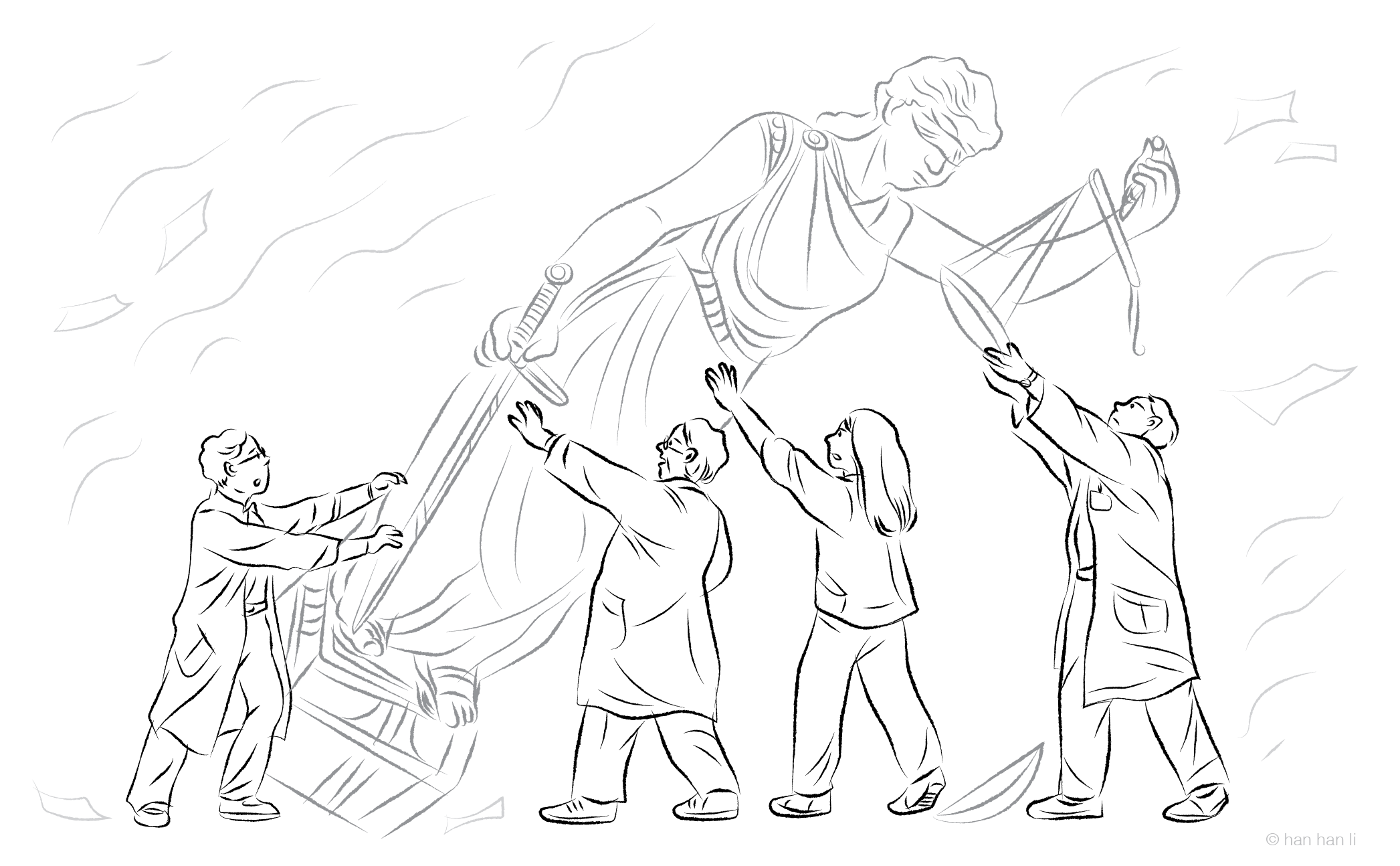
Il existe une longue histoire d’échanges fructueux entre le soutien par les pairs (SP) aux États-Unis et au Canada, mais la collaboration a diminué au cours des deux dernières décennies, le SP s’étant de plus en plus professionnalisé. Grâce à la reconnaissance et au financement du gouvernement, le SP est passé d’amitiés informelles au sein de la communauté entre personnes ayant vécu des expériences similaires à un emploi rémunéré dans les services cliniques. Dans ce commentaire, nous soutenons que le SP au Canada et aux États-Unis devrait recommencer à travailler ensemble. Nous partageons les défis éthiques liés à la professionnalisation — et à la cooptation et à la dérive qui y sont associées — du SP, qui s’éloigne de ses fondements uniques que sont les relations humaines authentiques, l’organisation de mouvements sociaux et les valeurs fondamentales d’autodétermination, de partage du pouvoir, d’espoir et de mutualité. La perte de pouvoir transformateur du SP qui en résulte est particulièrement importante à l’heure actuelle, alors qu’il a tant à offrir. Nous décrivons comment notre équipe de bioéthiciens engagés dans la communauté au Canada et aux États-Unis et les leaders de la discipline SP au Canada collaborent pour élaborer, légitimer et protéger les valeurs et l’éthique uniques de cette modalité de soins en pleine expansion et en constante évolution.
Références
1. PeerWorks. Frequently asked questions. PeerWorks; 2024.
2. Myrick K, del Vecchio P. Peer support services in the behavioral healthcare workforce: State of the field. Psychiatr Rehabil J. 2016;39(3):197-203.
3. Cyr C, McKee H, O’Hagan M, Priest R. Making the Case for Peer Support. Report to the Mental Health Commission of Canada Mental Health Peer Support Project Committee. Sept 2010.
4. Starkman M. The movement. Phoenix Rising: The Voice of the Psychiatrized. 1981;2(3):2A-9A.
5. Crossley N. Contesting Psychiatry: Social Movements in Mental Health. London: Routledge; 2006.
6. Frazer-Carroll M. Mad World: The Politics of Mental Health. London: Pluto Press; 2023.
7. Goffman E. Stigma: Notes on the Management of Spoiled Identity. Englewood Cliffs (NJ): Prentice-Hall; 1963.
8. Goffman E. Asylums: Essays on the Social Situation of Mental Patients and Other Inmates. Harmondsworth: Penguin; 1970.
9. Chesler P. Women & madness. New York: Avon; 1972.
10. Szasz T. The Myth of Mental Illness: Foundations of a Theory of Personal Conduct. New York: Hoeber-Harper; 1961.
11. Szasz T. The Manufacture of Madness: A Comparative Study of the Inquisition and the Mental Health Movement. Harper & Row; 1970.
12. Szasz T. The Myth of Psychotherapy: Mental Healing as Religion, Rhetoric, and Repression. New York: Oxford University Press; 1978.
13. Everett B. A Fragile Revolution: Consumers and Psychiatric Survivors Confront the Power of the Mental Health System. Waterloo: Wilfrid Laurier University Press; 2000.
14. Shimrat I. Call Me Crazy: Stories from the Mad Movement. Vancouver: Press Gang Publishers; 1997.
15. Weitz D. Phoenix Rising: Its birth and death. Border/Lines. 1990;(19):14-17.
16. Anthony WA. Recovery from mental illness: the guiding vision of the mental health service system in the 1990s. Psychosoc Rehabil J. 1993;16(4):11-23.
17. Deegan PE. Recovery: The lived experience of rehabilitation. Psychosoc Rehabil J. 1988;11(4):11-19.
18. Poole JM. Behind the Rhetoric: Mental Health Recovery in Ontario. New York: Columbia University Press; 2011.
19. Chamberlin J. On Our Own: Patient-Controlled Alternatives to the Mental Health System. New York: McGraw-Hill; 1978.
20. Finkler L. Psychiatric Survivor Pride Day: Community organizing with psychiatric survivors. Osgoode Hall Law J. 1997;35(3):763-72.
21. Reaume G. A history of Psychiatric Survivor Pride Day during the 1990s. Consumer/Survivor Information Resource Centre Bulletin. 2008;(374):2-3.
22. Mad in America Continuing Education. Mad studies: An introduction to philosophical, social, and cultural perspectives on madness. 2025.
23. Reaume G. Creating Mad People’s History as a university credit course since 2000. New Horizons Adult Educ Hum Resour Dev. 2019;31(1):22-39.
24. Stratford AC, Halpin M, Phillips K, et al. The growth of peer support: An international charter. J Ment Health. 2019;28(6):627-32.
25. Penney D, Prescott L. The co-optation of survivor knowledge: The danger of substituted values and voice. In: Russo J, Sweeney A, editors. Searching For a Rose Garden: Challenging Psychiatry, Fostering Mad Studies. Herefordshire: PCCS Books; 2016. p. 35-45.
26. Alberta AJ, Ploski RR. Cooptation of peer support staff: Quantitative evidence. Rehabil Process Outcome. 2014;3.
27. Britz B, Jones N. Experiencing and treating ‘madness’ in the United States circa 1967—2022: Critical counter-histories. SSM Ment Health. 2023;4:100228.
28. Shalaby RAH, Agyapong VI. Peer support in mental health: literature review. JMIR Ment Health. 2020;7(6):e15572.
29. Davidow S. The downfall of peer support: MHA & national certification. Mad in America: Science, Psychiatry and Social Justice. 18 Apr 2017.
30. Brown C, Stastny P. Peer workers in the mental health system: A transformative or collusive experiment? In: Russo J, Sweeney A, editors. Searching For a Rose Garden: Challenging Psychiatry, Fostering Mad Studies. Herefordshire: PCCS Books; 2016. p. 183-91.
31. Emerick RE. The politics of psychiatric self-help: Political factions, interactional support, and group longevity in a social movement. Soc Sci Med. 1991;32(10):1121-28.
32. Fisher DB. A new vision of healing as constructed by people with psychiatric disabilities working as mental health providers. Psychosoc Rehabil J. 1994;17(3):67-81.
33. McLean AH. From ex-patient alternatives to consumer options: Consequences of consumerism for psychiatric consumers and the ex-patient movement. Int J Health Serv. 2000;30(4):821-47.
34. National Association of Peer Supporters. National Practice Guidelines for Peer Specialists and Supervisors. Washington, DC: NAPS; 2019.
35. O’Hagan M. Stopovers on my way home from Mars: A journey into the psychiatric survivor movement in the USA, Britain and the Netherlands. 1993.
36. White WL. A lost vision: Addiction counseling as community organization. Alcohol Treat Q. 2001;19(4):1-32.
37. White WL. The road not taken: The lost roots of addiction counseling. Counselor. 2003;4(2):22-23.
38. Phillips KM. Supervision of peer support workers. In: O’Donoghue K, Engelbrecht L, editors. The Routledge International Handbook of Social Work Supervision. London: Routledge; 2021. p. 187-99.
39. Rebeiro Gruhl K, Lacarte S, Boucher M. Mainstream integration of mental health peer support in Canada: A mixed method study. Can J Community Ment Health. 2023;42(1):75-95.
40. Claxton-Wali T. Avoiding peer support drift: Maintaining your role as a change agent. Ontario Peer Development Initiative annual conference. 2017.
41. Ellison ML, Mueller L, Henze K, et al. The Veteran Supported Education Service Treatment Manual VetSEd. ENRM Veterans Hospital. Center for Health Quality, Outcomes, and Economic Research; 2012.
42. Crepaz-Keay D, Cyhlarova E. Ethical issues in mental health peer support. In: Sadler JZ, Fulford KWM, van Staden W, editors. The Oxford Handbook of Psychiatric Ethics. Oxford: Oxford University Press; 2015. p. 244-54.
43. Foye U, Lyons N, Shah P, et al. Understanding the barriers and facilitators to delivering peer support effectively in England: A qualitative interview study. BMC Psychiatry. 2025;25:480.
44. Government of Western Australia Mental Health Commission. The Role of Peer Work. 2023.
45. Sinclair A, Gillieatt S, Fernandes C, Mahboub L. Inclusion as assimilation, integration, or co-optation? A post-structural analysis of inclusion as produced through mental health research on peer support. Qual Health Res. 2023;33(6):543-55.
46. von Peter S, Kuesel M, Ziegenhagen J, Fehler G, Schmidt D, Ruiz-Perez G. “Change Agents” oder “Peer Washing”: inwiefern können Peer-und Genesungsbegleiter* innen zur Veränderung von psychiatrischen Einrichtungen beitragen? Psychiatr Prax. 2024;51(08):410-17.
47. World Health Organization. One-to-one peer support by and for people with lived experience. WHO QualityRights guidance module. 2019.
48. de Bie L, Michetti-Wilson E. Drift from Peer Support Values and Standards: A Position Statement and Call for Action. PeerWorks; 2024.
49. Adams WE, Duquette R, de Wet A, Rogers ES. Competing allegiance in an unclear role: Peer and non-peer understanding of peer support in Massachusetts, United States. SSM Ment Health. 2023;4:100245.
50. Maviglia M, Charzuk A, Hume D. Does official recognition of peers undermine their work? Mad in America: Science, Psychiatry and Social Justice. 29 May 2021.
51. Homewood Health Centre. The mental health toll of trade tariffs: Understanding the hidden impact.
52. Mental Health Research Canada. The Impact of Economic and Political Strain on Canadians’ Mental Health: Omnibus Survey. 27 Mar 2025.
53. Mental Health Commission of Canada. Changing Directions, Changing Lives: The Mental Health Strategy for Canada. Calgary, AB; 2012.
54. PeerWorks. Strategic Plan 2025-2035. 2025.
55. Fortuna KL, Marceau SR, Kadakia A, et al. Peer support specialists’ perspectives of a standard online research ethics training: Qualitative study. JMIR Form Res. 2022;6(2):e29073.
56. Knopes J. Chat windows and zoom bombers: Virtual boundaries in mental health peer support. Disabil Soc. 2025;40(4):979-97.
57. Knopes J, D’égale-Flanagan M. Dual relationships in mental health peer support. Psychiatr Serv. 2023;74(12):1296-98.
58. Morley G, Sankary LR. Nurturing moral community: A novel moral distress peer support navigator tool. Nurs Ethics. 2024;31(5):980-91.
59. Regel E. Mental health and humanitarian crisis: Moral stress in trauma therapy. Bioethics. 2024;38(9):811-15.
60. Knopes J, Guidry-Grimes L. Reframing mental health ethics. Community Ment Health J. 2024;60(2):208-14.
Téléchargements
Publié
Comment citer
Numéro
Rubrique
Licence
© Lee de Bie, Julia Knopes, Allison Dunning, Allyson Theodorou , Brookelyn Fortier 2026

Cette œuvre est sous licence Creative Commons Attribution 4.0 International.
La Revue canadienne de bioéthique applique la Creative Commons Attribution 4.0 International License à toutes ses publications. Les auteurs conserveront leur droit d'auteur sur leur publication et ils pourront, par exemple, réutiliser leur publication, mettre un lien sur leur page d'accueil ou site web institutionnel, ou déposer un fichier PDF dans un dépôt public. Toutefois, les auteurs permettent à quiconque de télécharger, réutiliser, réimprimer, distribuer, ou copier leur publication, tant que les auteurs originaux et les sources sont cités.












_smaller.png)