
Exploring Learners’ Experiences with Clinical Ethics Consultations: A Narrative Reflection on the Impact and Role of Emotions
DOI :
https://doi.org/10.7202/1126621arMots-clés :
professionnels de la santé, éthiciens cliniques, apprenants, émotions, soins de santé, empathieLangue(s) :
AnglaisRésumé
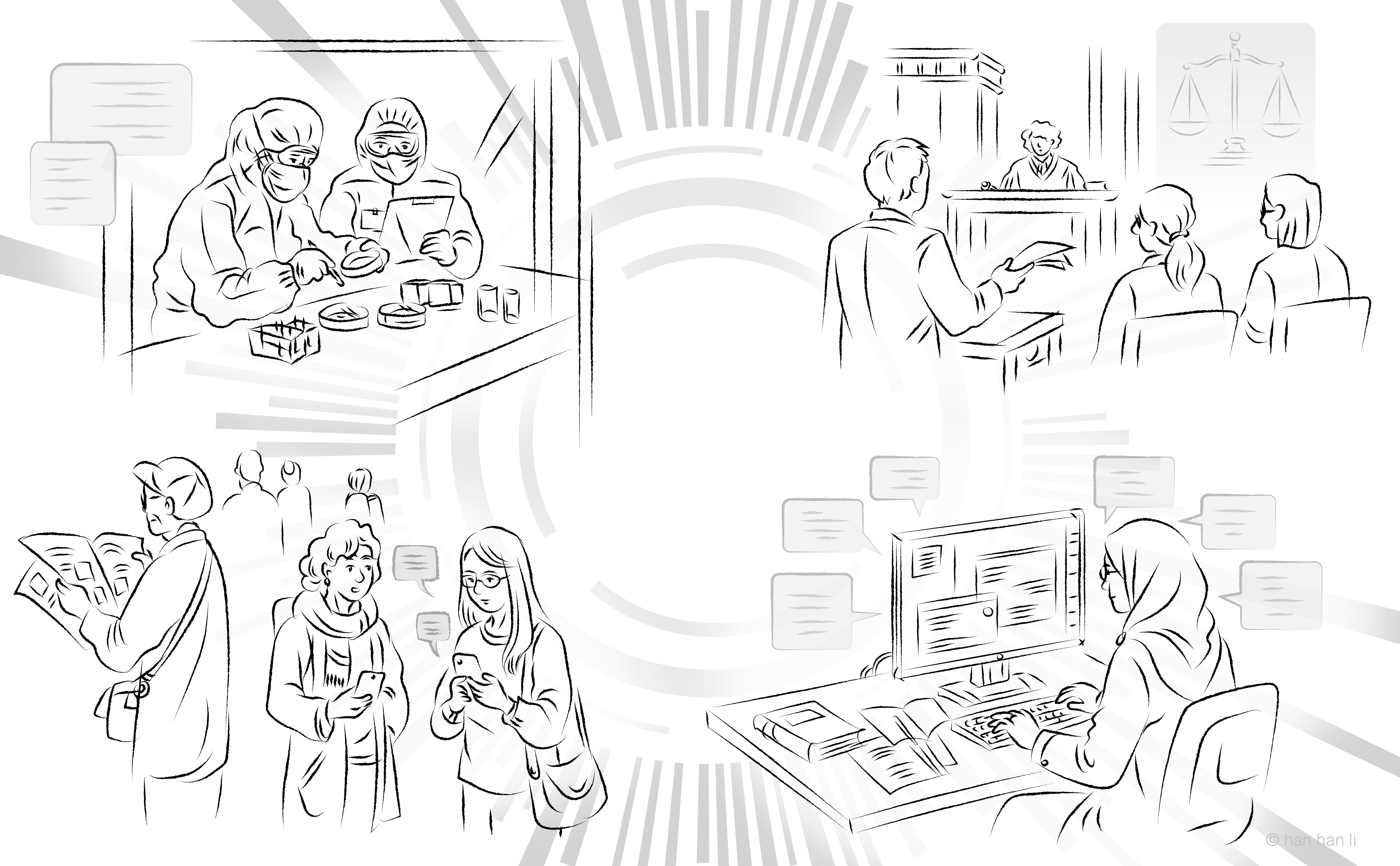
En tant qu’étudiants en éthique clinique, nous avons observé des consultations d’éthique et éprouvé diverses réactions émotionnelles suite à ces consultations, notamment concernant les décisions de fin de vie. Bien qu’il existe une littérature abondante sur le rôle et la nature des émotions chez de nombreux professionnels de santé de première ligne, tels que les infirmiers et les médecins, les recherches sur les expériences émotionnelles des éthiciens cliniques et des étudiants en éthique clinique restent limitées. Nous sommes convaincus que la compréhension de ces expériences émotionnelles peut enrichir notre compréhension du rôle et de la pratique des éthiciens cliniques, en particulier compte tenu des contextes de soins complexes et fortement marqués par les valeurs dans lesquels les consultations d’éthique ont souvent lieu. Ces recherches peuvent également éclairer la formation en éthique actuelle et future, contribuant ainsi à l’élaboration de programmes de formation de qualité pour les futurs éthiciens, tels que des laboratoires de simulation bioéthique. Cet article a sollicité la contribution volontaire de sept étudiants en éthique clinique, qui ont fourni un récit de leurs expériences de consultations d’éthique clinique afin d’identifier les thèmes clés liés aux réactions émotionnelles lors de ces consultations.
Références
1. Braun V, Clarke V. Using thematic analysis in psychology. Qualitative Research in Psychology. 2006;3(2):77-101.
2. Gengler AM. Emotions and medical decision-making. Social Psychology Quarterly. 2020;83(2):174-94.
3. Bruns F, Frewer A. Ethics consultation and empathy. HEC Forum. 2011;23(4):247-55.
4. McColl-Kennedy JR, Danaher TS, Gallan AS, et al. How do you feel today? Managing patient emotions during health care experiences to enhance well-being. Journal of Business Research. 2017;79:247-59.
5. Saviani-Zeoti F, Petean EBL. Breaking bad news: Doctors’ feelings and behaviors. The Spanish Journal of Psychology. 2007;10(2):380-87.
6. Rasoal D, Kihlgren A, James I, Svantesson M. What healthcare teams find ethically difficult. Nursing Ethics. 2016;23(8):825-37.
7. Goldenson J, Gutheil T. Forensic mental health evaluators’ unprocessed emotions as an often-overlooked form of bias. Journal of the American Academy of Psychiatry and the Law. 2023;51(4):551-57.
8. Delgado Bolton RC, San-Martín M, Vivanco L. Role of empathy and lifelong learning abilities in physicians and nurses who work in direct contact with patients in adverse working conditions. International Journal of Environmental Research and Public Health. 2022;19(5):3012.
9. Serrano-Domínguez S, Lahera-Martín M, Ibáñez-Beroiz B, et al. Emotional overload of health personnel of the Navarra Health Service during the SARS-CoV-2 pandemic. Archivos de prevención de riesgos laborales. 2023;26(4):275-90.
10. Odonkor MN, Vidal C, Seligman E, Kouo T, Husain A. Tracking staff mood and concerns in a pediatric emergency department during the COVID-19 pandemic. Journal of Emergency Nursing. 2024;50(1):117-125.e1.
11. Badrfam R, Zandifar A, Mohammadian Khonsari N, Qorbani M. Suicidal ideation, burnout, and their correlation among health care workers at the end of the fourth wave of the COVID-19 pandemic in Alborz Province, Iran. Frontiers in Psychiatry. 2023;14:1261105.
12. Dadich A, Olson RE. How and why emotions matter in interprofessional healthcare. International Journal of Work Organisation and Emotion. 2017;8(1):59-79.
13. Vacca A, Minò MV, Longo R, et al. The emotional impact on mental health workers in the care of patients with mental disorders in the pandemic and post COVID-19 pandemic: a measure of “burnout” and “compassion fatigue”. Psychiatria Danubina. 2023;35(Suppl 2):292-95.
14. Luff D, Martin EB, Mills K, et al. Clinicians’ strategies for managing their emotions during difficult healthcare conversations. Patient Education and Counseling. 2016;99(9):1461-66.
15. Berger S, Grzonka P, Frei AI, et al. Violence against healthcare professionals in intensive care units: a systematic review and meta-analysis of frequency, risk factors, interventions, and preventive measures. Critical Care. 2024;28:61.
16. Giménez Lozano JM, Martínez Ramón JP, Morales Rodríguez FM. Doctors and nurses: a systematic review of the risk and protective factors in workplace violence and burnout. International Journal of Environmental Research and Public Health. 2021;18(6):3280.
17. Roth K, Köppen J, Henschke C. Workplace violence and burnout among emergency medical service workers and nurses in Germany: a cross-sectional study. Human Resources for Health. 2025;23:66.
18. Chowdhury SR, Kabir H, Mazumder S, et al. Workplace violence, bullying, burnout, job satisfaction and their correlation with depression among Bangladeshi nurses: a cross-sectional survey during the COVID-19 pandemic. PloS One. 2022;17(9):e0274965.
19. Grant S, Davidson J, Manges K, et al. Creating healthful work environments to deliver on the quadruple aim: a call to action. The Journal of Nursing Administration. 2020;50(6):314-21.
20. Goff AD, Michie MM, Lambrix MA, Gerrek ML. The emotional impact of clinical ethics work on clinical ethicists: a qualitative study. AJOB Empirical Bioethics. 2025;16(3):140-50.
21. Bogiatzaki V, Frengidou E, Savakis E, et al. Empathy and burnout of healthcare professionals in public hospitals of greece. International Journal of Caring Sciences. 2019;12(2):611-26.
22. Wilkinson H, Whittington R, Perry L, Eames C. Examining the relationship between burnout and empathy in healthcare professionals: a systematic review. Burnout Research. 2017;6:18-29.
23. Shelton W, Geppert C, Jankowski J. The role of communication and interpersonal skills in clinical ethics consultation: the need for a competency in advanced ethics facilitation. Journal of Clinical Ethics. 2016;27(1):28-38.
24. Redinger MJ, Gibb TS. Counter-transference and the clinical ethics encounter: what, why, and how we feel during consultations. Cambridge Quarterly of Healthcare Ethics. 2020;29(2):317-26.
25. Wright L, Ross K, Daar AS. The roles of a bioethicist on an organ transplantation service. American Journal of Transplantation. 2005;5(4):821-26.
26. Kopelman LM. Bioethics as a second-order discipline: who is not a bioethicist? The Journal of Medicine and Philosophy. 2006;31(6):601-28.
27. Molewijk B, Kleinlugtenbelt D, Widdershoven G. The role of emotions in moral case deliberation: theory, practice, and methodology. Bioethics. 2011;25(7):383-93.
28. Vieth A. Inclusive consultation: a hermeneutical approach to ethical deliberation in the clinical setting. HEC Forum. 2011;23(4):295-304.
29. Agich GJ. What kind of doing is clinical ethics? Theoretical Medicine and Bioethics. 2005;26(1):7-24.
30. Agich GJ. Defense mechanisms in ethics consultation. HEC Forum. 2011;23(4):269-79.
31. Kasman DL. The clinical bioethicist’s role: should we aim to relieve suffering? Narrative Inquiry in Bioethics. 2016;6(3):223-31.
32. Albuquerque A. Empathic care as a command of a new clinical bioethics. Nursing & Care Open Access Journal. 2023;9(2):95-100.
33. Kirkscey R. Bioethical communication: shared decision-making and relational empathy. Journal of Communication in Healthcare. 2018;11(3):164-74.
Téléchargements
Publié
Comment citer
Numéro
Rubrique
Licence
© Téa Christopoulos, Oluwaseun Sobode , Megan Bailey , Dylan McKibbon, Thomas Milovac , Sam Moshiri , Jessie Van Leeve 2026

Cette œuvre est sous licence Creative Commons Attribution 4.0 International.
La Revue canadienne de bioéthique applique la Creative Commons Attribution 4.0 International License à toutes ses publications. Les auteurs conserveront leur droit d'auteur sur leur publication et ils pourront, par exemple, réutiliser leur publication, mettre un lien sur leur page d'accueil ou site web institutionnel, ou déposer un fichier PDF dans un dépôt public. Toutefois, les auteurs permettent à quiconque de télécharger, réutiliser, réimprimer, distribuer, ou copier leur publication, tant que les auteurs originaux et les sources sont cités.












_smaller.png)