Ethical Issues in Humanitarian Work: Perceptions of Humanitarian Ethics Experts, Workers, and Non-Governmental Organization Members
DOI :
https://doi.org/10.7202/1124206arMots-clés :
problème moral, tension, dilemme, aide humanitaire, silence éthique, néocolonialisme, recherche empirique, recherche qualitativeLangue(s) :
AnglaisRésumé
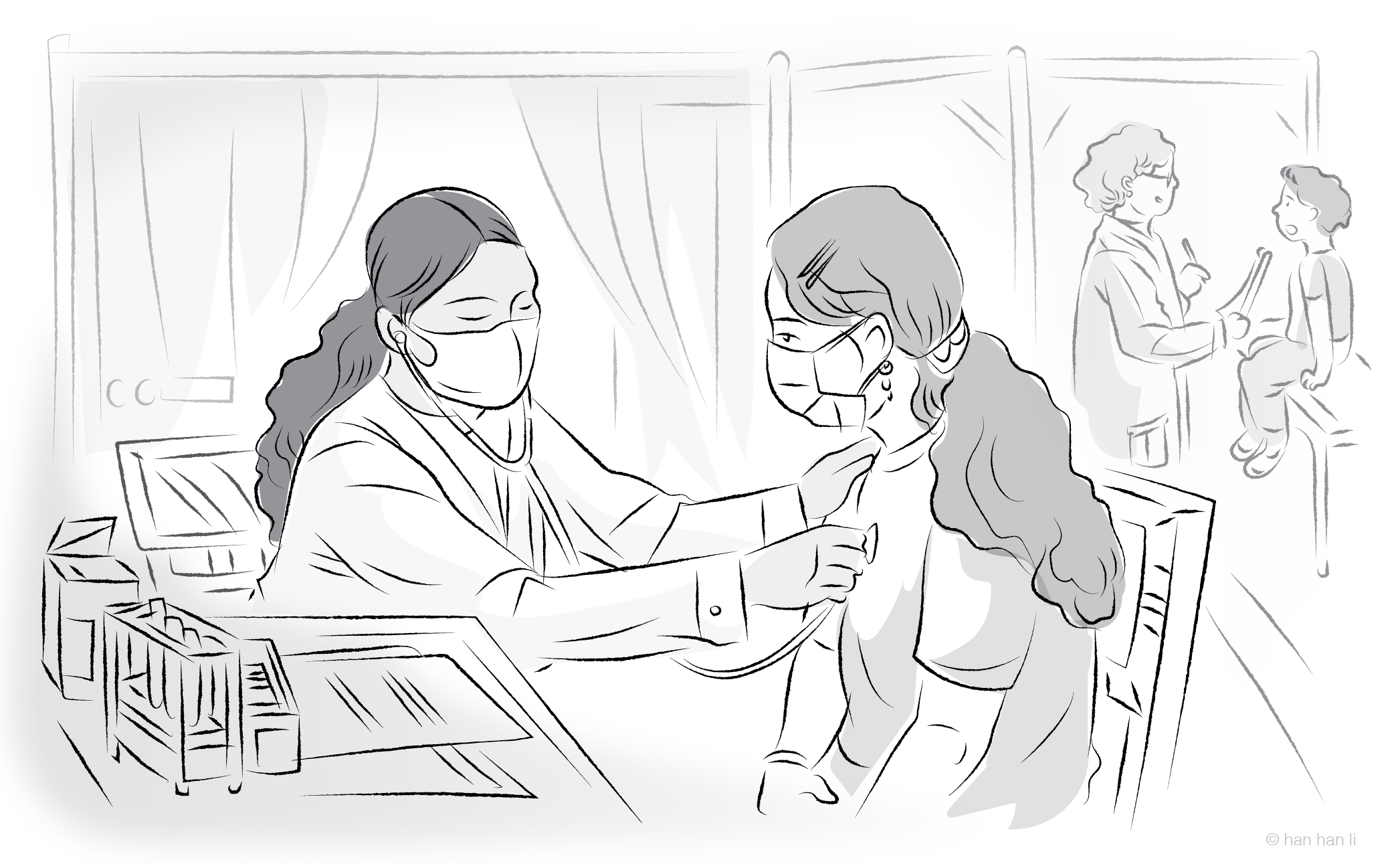
Cet article documente empiriquement les perceptions et les expériences de divers acteurs du milieu humanitaire, y compris des travailleurs humanitaires, des membres d’organisations non gouvernementales (ONG) et des spécialistes en éthique humanitaire, concernant les enjeux éthiques du travail humanitaire. Nous avons réalisé quinze entrevues avec des personnes participantes, à partir desquelles nous avons dégagé quatre catégories d’enjeux éthiques : les tensions de valeurs, le manque de ressources, les considérations politiques et le néocolonialisme. Les tensions de valeurs recouvrent des questions éthiques liées aux conflits interculturels, à l’équilibre entre les soins, la sécurité et la collaboration, aux soins d’urgence et aux soins à long terme, ainsi qu’au silence éthique. Le manque de ressources comprend des enjeux tels que l’insuffisance de ressources financières et matérielles, le manque de préparation et l’absence de ressources éthiques, qui contribuent à des difficultés opérationnelles. Les considérations politiques concernent les enjeux éthiques liés aux opérations des ONG, notamment le décalage entre les décisions organisationnelles et les pratiques sur le terrain, l’inégalité de traitement entre le personnel local et le personnel expatrié, ainsi que les situations d’autoritarisme, de racisme et de corruption au sein des ONG et de leurs partenaires. Les enjeux éthiques liés au néocolonialisme mettent en lumière la persistance des idéologies occidentales et des dynamiques de pouvoir dans les organisations humanitaires. Ceux-ci se manifestent notamment par le paternalisme, le contrôle de la prise de décision par des personnes blanches et les déséquilibres de pouvoir entre les ONG et les gouvernements locaux, perpétuant un sentiment de supériorité de l’Occident sur les personnes non blanches. Enfin, ayant identifié le silence éthique et le néocolonialisme comme des enjeux éthiques importants de cette recherche, c’est-à-dire peu ou pas abordés dans la littérature empirique antérieure, nous proposons une réflexion sur les injustices structurelles et les inégalités systémiques qui traversent le travail humanitaire.
Références
1. Rose J, O’Keefe P, Jayawickrama J, O’Brien G. The challenge of humanitarian aid: an overview. Environmental Hazards. 2013;12(1):74-92.
2. Terry F. The paradoxes of humanitarian aid. Agenda: A Journal of Policy Analysis and Reform. 1998;5(2):135-46.
3. Banatvala N, Zwi AB. Conflict and health: public health and humanitarian interventions: developing the evidence base. BMJ. 2000;321(7253):101-5.
4. Civaner MM, Vatansever K, Pala K. Ethical problems in an era where disasters have become a part of daily life: A qualitative study of healthcare workers in Turkey. PLoS one. 2017;12(3):e0174162.
5. Côté LP, Drolet MJ. Conceptualizing ethical issues of humanitarian work: results from a critical literature review. Canadian Journal of Bioethics/Revue canadienne de bioéthique. 2021;4(1):152-67.
6. Swisher LL, Arslanian LE, Davis CM. The realm-individual process-situation (rips) model of ethical decision-making. HPA Resource. 2005;5(3):1-8.
7. Slim H. Humanitarian Ethics: A Guide to the Morality of Aid in War and Disaster. London: Hurst; 2015.
8. Giannou C, Baldan M. War Surgery: Working With Limited Resources in Armed Conflict and Other Situations of Violence. Vol. 1. ICRC; 2009.
9. Haver K. Tug of War: Ethical Decision-Making to Enable Humanitarian Access in High-Risk Environments. Humanitarian Practice Network. 9 Nov 2016.
10. Hunt M, Chénier A, Bezanson K, et al. Moral experiences of humanitarian health professionals caring for patients who are dying or likely to die in a humanitarian crisis. Journal of International Humanitarian Action. 2018;3(1):12.
11. Hunt M, Pal NE, Schwartz L, O’Mathúna D. Ethical challenges in the provision of mental health services for children and families during disasters. Current Psychiatry Reports. 2018;20(8):60.
12. Lopes Cardozo B, Gotway Crawford C, Eriksson C, et al. Psychological distress, depression, anxiety, and burnout among international humanitarian aid workers: a longitudinal study. PLoS one. 2012;7(9):e44948.
13. Schwartz L, Hunt M, Sinding C, et al. Models for humanitarian health care ethics. Public Health Ethics. 2012;5(1):81-90.
14. Côté LP, Drolet MJ. Ethical issues arising in humanitarian work and possible responses to them: results from a critical literature review. Canadian Journal of Bioethics/Revue canadienne de bioéthique. 2023;6(3-4):16-32.
15. Meldrum H. Spirituality in medical practice: how humanitarian physicians draw their boundaries with patients. Integrative Medicine. 2011;10(3).
16. Asgary R, Lawrence K. Evaluating underpinning, complexity and implications of ethical situations in humanitarian operations: qualitative study through the lens of career humanitarian workers. BMJ Open. 2020;10(9):e039463.
17. Draper H, Jenkins S. Ethical challenges experienced by UK military medical personnel deployed to Sierra Leone (operation GRITROCK) during the 2014–2015 Ebola outbreak: a qualitative study. BMC Medical Ethics. 2017;18:77.
18. Funk KL, Rayes D, Rubenstein LS, et al. Ethical challenges among humanitarian organisations: insights from the response to the Syrian conflict. In: Ahmad A, Smith J, editors. Humanitarian Action and Ethics. London: Zed Books; 2018. p. 133-45.
19. Schwartz L, Sinding C, Hunt M, et al. Ethics in humanitarian aid work: learning from the narratives of humanitarian health workers. AJOB Primary Research. 2010;1(3):45-54.
20. Sinding C, Schwartz L, Hunt M, et al. “Playing God because you have to”: health professionals’ narratives of rationing care in humanitarian and development work. Public Health Ethics. 2010;3(2):147-56.
21. Gustavsson ME, Juth N, Arnberg FK, von Schreeb J. Dealing with difficult choices: a qualitative study of experiences and consequences of moral challenges among disaster healthcare responders. Conflict and Health. 2022;16:24.
22. Rubenstein LS, Robinson WC. Reality Makes Our Decisions: Ethical Challenges in Humanitarian Health in Situations of Extreme Violence. Center for Public Health and Human Rights; 2019.
23. Fraser V, Hunt MR, De Laat S, Schwartz L. The development of a humanitarian health ethics analysis tool. Prehospital and Disaster Medicine. 2015;30(4):412-20.
24. Gotowiec S, Cantor-Graae E. The burden of choice: a qualitative study of healthcare professionals’ reactions to ethical challenges in humanitarian crises. Journal of International Humanitarian Action. 2017;2:2.
25. Hunt M, Nouvet E, Chénier A, et al. Addressing obstacles to the inclusion of palliative care in humanitarian health projects: a qualitative study of humanitarian health professionals’ and policy makers’ perceptions. Conflict and Health. 2020;14:70.
26. Hunt M. Ethics beyond borders: how health professionals experience ethics in humanitarian assistance and development work. Developing World Bioethics. 2008;8(2):59-69.
27. Hunt M. Moral experience of canadian healthcare professionals in humanitarian work. Prehospital and Disaster Medicine. 2009;24(6):518-24.
28. Hunt M, Eckenwiler L, Hyppolite SR, et al. Closing well: national and international humanitarian workers’ perspectives on the ethics of closing humanitarian health projects. Journal of International Humanitarian Action. 2020;5:16.
29. Michael M, Zwi AB. Oceans of need in the desert: ethical issues identified while researching humanitarian agency response in afghanistan. Developing World Bioethics. 2002;2(2):109-30.
30. DePoy E, Gitlin LN. Introduction to Research: Understanding and Applying Multiple Strategies. St. Louis, Missouri: Elsevier; 2020.
31. Hammell KW, Carpenter C, Dyck I, editors. Using Qualitative Research: A Practical Introduction for Occupational and Physical Therapists. Edinburgh: Churchill Livingstone; 2000.
32. Husserl E. The train of thoughts in the lectures. In: Polifroni EC, Welch M, editors. Perspectives on Philosophy of Science in Nursing. New York: Lippincott; 1999. p. 247-62.
33. Husserl E, David. The Crisis of European Sciences and Transcendental Phenomenology: An Introduction to Phenomenological Philosophy. Evanston, USA: Northwestern Univ. Press; 1984.
34. Fortin MF, Gagnon J. Fondements et étapes du processus de recherche: méthodes quantitatives et qualitatives. Montréal: Chenelière Éducation; 2022.
35. Bogdan R, Biklen SK. Qualitative Research for Education: An Introduction to Theory and Methods. Boston: Allyn and Bacon; 2006.
36. Drolet MJ, Girard K. Les enjeux éthiques de la recherche en ergothérapie : un portrait préoccupant. Canadian Journal of Bioethics/Revue canadienne de bioéthique. 2020;3(3):21-40.
37. Thomas SP, Pollio HR. Listening to Patients: A Phenomenological Approach to Nursing Research and Practice. New York: Springer Publishing Company; 2004.
38. Giorgi A. De la méthode phénoménologique utilisée comme mode de recherche qualitative en sciences humaines: Théories, pratique et évaluation. In: Poupart J, Groulx, L. H., Deslauries JP, editors. La recherche qualitative: enjeux épistémologiques et méthodologiques. Montréal: Gaëtan Morin; 1997. p. 341-64.
39. Glaser JW. Three Realms of Ethics: Individual Institutional Societal: Theoretical Model and Case Studies. Lanham: Rowman and Littlefield; 1994.
40. Mills CW. The Racial Contract. Ithaca and London: Cornell University Press; 1997.
41. Mills CW. Black Rights/White Wrongs: The Critique of Racial Liberalism. New York: Oxford University Press; 2017.
42. Nixon SA. The coin model of privilege and critical allyship: implications for health. BMC Public Health. 2019;19(1):1637.
43. Applebaum B. “Listening silence” and its discursive effects. Educational Theory. 2016;66(3):389-404.
44. Pohlhaus Jr G. Relational knowing and epistemic injustice: toward a theory of willful hermeneutical ignorance. Hypatia. 2012;27(4):715-35.
Téléchargements
Publié
Comment citer
Numéro
Rubrique
Licence
© Federico Valgimigli, Louis Pierre Côté, Marie-Josée Drolet 2026

Cette œuvre est sous licence Creative Commons Attribution 4.0 International.
La Revue canadienne de bioéthique applique la Creative Commons Attribution 4.0 International License à toutes ses publications. Les auteurs conserveront leur droit d'auteur sur leur publication et ils pourront, par exemple, réutiliser leur publication, mettre un lien sur leur page d'accueil ou site web institutionnel, ou déposer un fichier PDF dans un dépôt public. Toutefois, les auteurs permettent à quiconque de télécharger, réutiliser, réimprimer, distribuer, ou copier leur publication, tant que les auteurs originaux et les sources sont cités.












_smaller.png)