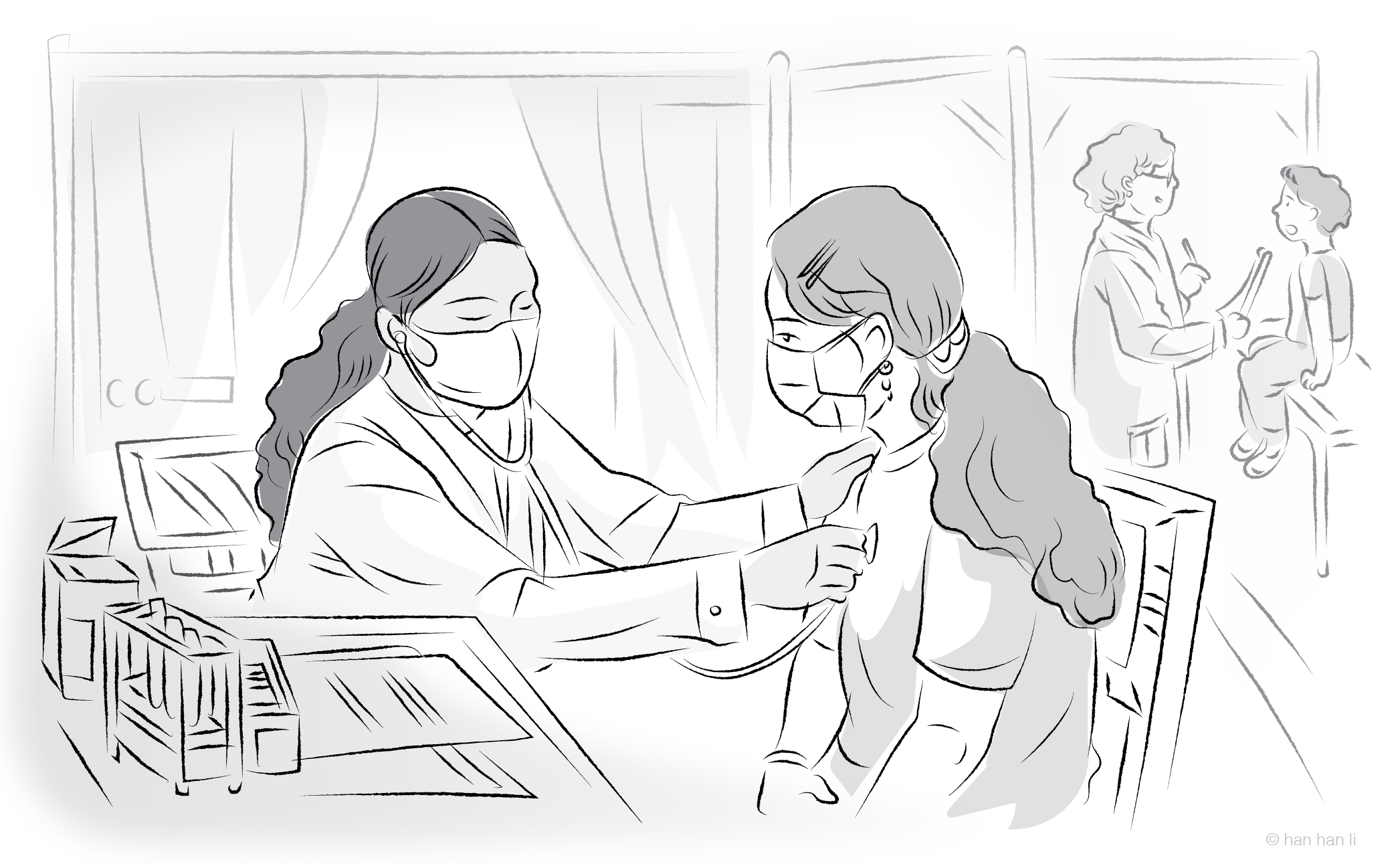
Parental Comprehension of Standard and Simplified Information Consent Forms in a Pediatric Clinical Trial Simulation – A Randomized Controlled Study
DOI :
https://doi.org/10.7202/1124207arMots-clés :
formulaires de consentement éclairé, simplifiés, compréhension, pédiatrique, questionnaire validéLangue(s) :
AnglaisRésumé
Contexte : Les formulaires de consentement éclairé (FCE) sont une condition préalable obligatoire à la participation à des essais cliniques. Dans les études pédiatriques, le FCE est généralement signé par les parents de l’enfant. Les FCE conçus pour les essais cliniques sont souvent longs et complexes à comprendre. Nous avons mené cette étude afin de déterminer si un FCE simplifié améliorerait la compréhension des parents par rapport à un FCE standard. Méthodes : Un essai contrôlé randomisé, en simple aveugle, mené dans un seul centre et portant sur deux FCE fictifs, a été réalisé dans un hôpital universitaire tertiaire canadien spécialisé dans la santé maternelle et infantile. Les parents d’enfants hospitalisés ont été invités à lire soit un FCE standard, soit un FCE simplifié. La compréhension des parents a été évaluée à l’aide du questionnaire MICCA (Modular Informed Consent Comprehension Assessment). Le principal objectif de cette étude était d’évaluer la proportion de parents ayant obtenu un score MICCA de 75 % ou plus. Résultats : Cent cinquante participants ont répondu aux questionnaires de l’étude. Le critère d’évaluation principal a été atteint par 55,7 % des participants ayant lu le formulaire simplifié, contre 46,2 % dans le groupe ayant lu le formulaire standard (p = 0,303). Les scores MICCA moyens étaient respectivement de 17,87 et 17,75 points (p=0,847). Les thèmes mal compris par les deux groupes étaient les procédures de l’étude, les effets indésirables, les autres options thérapeutiques disponibles ainsi que les principaux avantages et l’objectif de l’étude. Conclusion : Cette étude randomisée contrôlée, monocentrique et en simple aveugle, a montré que la compréhension était similaire entre un formulaire de consentement éclairé simplifié et un formulaire standard. Cela suggère que l’utilisation de formulaires simplifiés n’améliore ni ne nuit à la compréhension des parents. Par conséquent, un formulaire simplifié devrait être utilisé aussi souvent que possible dans les projets de recherche pédiatrique.
Références
1. Roth-Cline M, Nelson RM. Parental permission and child assent in research on children. Yale J Biol Med. 2013;86(3):291-301.
2. World Medical Association. World Medical Association Declaration of Helsinki: Ethical Principles for Medical Research Involving Human Subjects. JAMA. 2013;310(20):2191-4.
3. Code Civil du Québec. CCQ 1991.
4. Government of Canada. Comité d’éthique de la recherche: Processus de consentement. Ottawa; Health Canada-PHAC Research Ethics Board Secretariat; 2023.
5. Leibson T, Koren G. Informed consent in pediatric research. Pediatric Drugs. 2015;17(1):5-11.
6. Hazen RA, Drotar D, Kodish E. The role of the consent document in informed consent for pediatric leukemia trials. Contemp Clin Trials. 2007;28(4):401-8.
7. Grant SC. Informed consent—we can and should do better. JAMA Network Open. 2021;4(4):e2110848.
8. Kass NE, Chaisson L, Taylor HA, et al. Length and complexity of US and international HIV consent forms from federal HIV network trials. J Gen Intern Med. 2011;26(11):1324-8.
9. Berger O, Grønberg BH, Sand K, Kaasa S, Loge JH. The length of consent documents in oncological trials is doubled in twenty years. Ann Oncol. 2009;20(2):379-85.
10. Wen G, Liu X, Huang L, et al. Readability and content assessment of informed consent forms for phase ii-iv clinical trials in China. PLoS One. 2016;11(10):e0164251.
11. Epstein LC, Lasagna L. Obtaining informed consent. Form or substance. Arch Intern Med. 1969;123(6):682-8.
12. Beardsley E, Jefford M, Mileshkin L. Longer consent forms for clinical trials compromise patient understanding: so why are they lengthening? J Clin Oncol. 2007;25(9):e13-4.
13. Nishimura A, Carey J, Erwin PJ, et al. Improving understanding in the research informed consent process: a systematic review of 54 interventions tested in randomized control trials. BMC Medical Ethics. 2013;14:28.
14. Pietrzykowski T, Smilowska K. The reality of informed consent: empirical studies on patient comprehension—systematic review. Trials. 2021;22:57.
15. Tam NT Huy NT, Thoa LTB, et al. Participants’ understanding of informed consent in clinical trials over three decades: systematic review and meta-analysis. Bull World Health Organ. 2015;93(3):186-98h.
16. Tait AR, Voepel-Lewis T, Nair VN, Narisetty NN, Fagerlin A. Informing the uninformed: optimizing the consent message using a fractional factorial design. JAMA Pediatrics. 2013;167(7):640-6.
17. Perrault EK, Keating DM. Seeking ways to inform the uninformed: improving the Informed consent process in online social science research. J. Empir. Res. Hum. Res. Ethics. 2018;13(1):50-60.
18. Koonrungsesomboon N, Teekachunhatean S, Hanprasertpong N, et al. Improved participants’ understanding in a healthy volunteer study using the SIDCER informed consent form: a randomized-controlled study. Eur J Clin Pharmacol. 2016;72(4):413-21.
19. Koonrungsesomboon N, Tharavanij T, Phiphatpatthamaamphan K, et al. Improved participants’ understanding of research information in real settings using the SIDCER informed consent form: a randomized-controlled informed consent study nested with eight clinical trials. Eur J Clin Pharmacol. 2017;73(2):141-9.
20. Koonrungsesomboon N, Traivaree C, Tiyapsane C, Karbwang J. Improved parental understanding by an enhanced informed consent form: a randomized controlled study nested in a paediatric drug trial. BMJ Open. 2019;9(11):e029530.
21. MSSS. Éthique de la recherche : Clauses légales. Gouvernement de Québerc; 2021.
22. Lix Score and readability. Lix score.
23. Buccini LD, Caputi P, Iverson D, Jones C. Toward a construct definition of informed consent comprehension. J Empir Res Hum Res Ethics. 2009;4(1):17-23.
24. Addissie A, Abay S, Feleke Y, et al. Cluster randomized trial assessing the effects of rapid ethical assessment on informed consent comprehension in a low-resource setting. BMC Medical Ethics. 2016;17:40.
25. Kon AA, Klug M. Methods and practices of investigators for determining participants’ decisional capacity and comprehension of protocols. J Empir Res Hum Res Ethics. 2006;1(4):61-8.
26. Institut de la statistique du Québec. Niveau de scolarité; 2025.
27. Koonrungsesomboon N, Charoenkwan P, Natesirinilkul R, et al. What information and the extent of information to be provided in an informed assent/consent form of pediatric drug trials. BMC Medical Ethics. 2022;23:113.
28. Kadam RA. Informed consent process: A step further towards making it meaningful! Perspect Clin Res. 2017;8(3):107-12.
29. Statistics Canada. Literacy, numeracy - Average scores and distribution of proficiency levels, by labour force status, highest level of education and age group. Table 37-10-0049-01. 22 Jun 2015.
30. National Center for Education Statistics (NCES). Skills of U.S. unemployed, young, and older adults in sharper focus: results from the Program for the International Assessment of Adult Competencies (PIAAC) 2012/2014. In: US Department of Education, editor. Washington (DC): NCES; 2016.
Téléchargements
Fichiers supplémentaires
Publié
Comment citer
Numéro
Rubrique
Licence
© Claudia Lord, Gabrielle Gauthieur, Emma Legault, Irina Mitrea, Patrick Gogognon, Hélène Roy, Denis Lebel, Pascal Bédard, Marie-Élaine Métras 2026

Cette œuvre est sous licence Creative Commons Attribution 4.0 International.
La Revue canadienne de bioéthique applique la Creative Commons Attribution 4.0 International License à toutes ses publications. Les auteurs conserveront leur droit d'auteur sur leur publication et ils pourront, par exemple, réutiliser leur publication, mettre un lien sur leur page d'accueil ou site web institutionnel, ou déposer un fichier PDF dans un dépôt public. Toutefois, les auteurs permettent à quiconque de télécharger, réutiliser, réimprimer, distribuer, ou copier leur publication, tant que les auteurs originaux et les sources sont cités.










_smaller.png)